

Weak Grid, Small Load — Sizing a 30 kW PV + Storage Cabinet for Farms and Workshops
Most solar conversations in Malaysia start with a factory drawing a megawatt. This one starts with a workshop drawing fifteen kilowatts and a supply that drops out three times a week.
What a weak grid feels like, and where the 30 kW class fits
A weak supply is not the same as no supply, but three things keep happening.
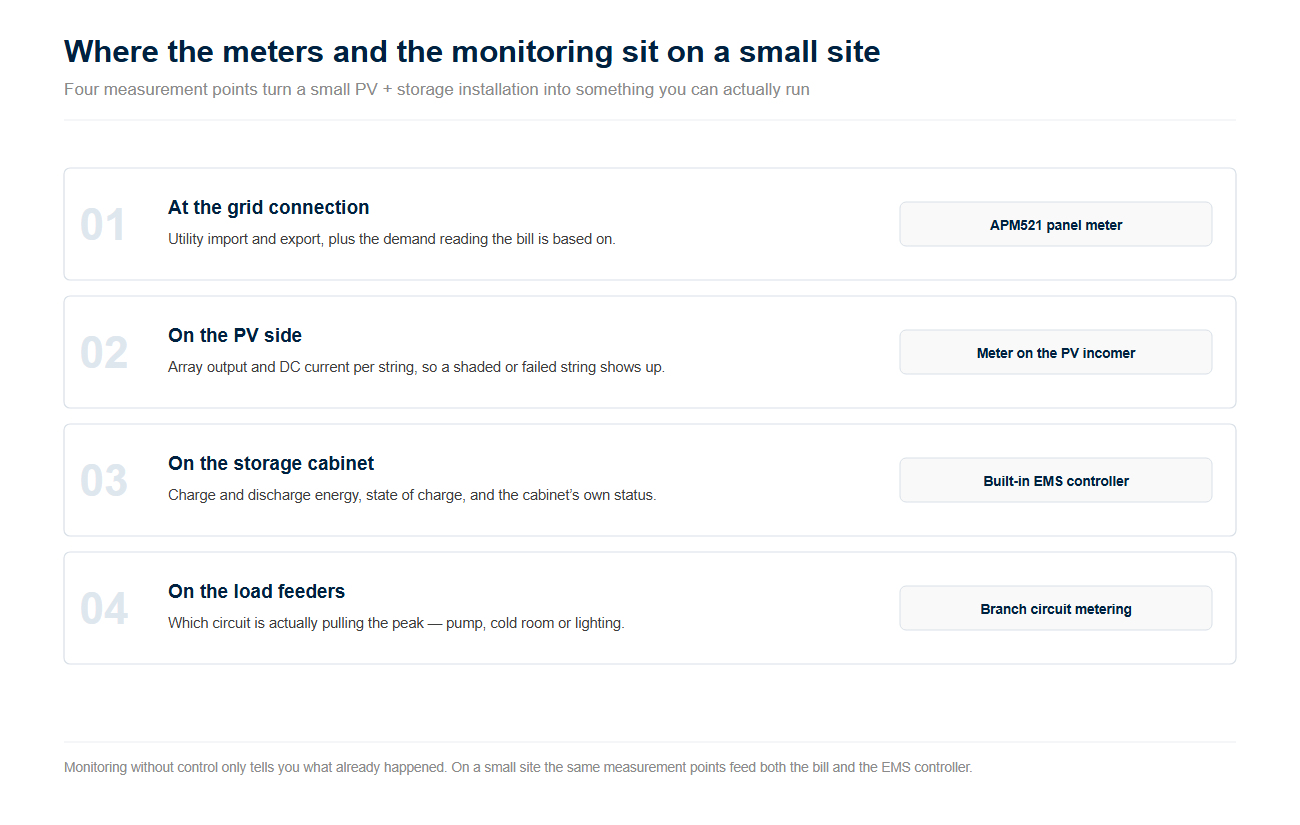
A PV plus storage cabinet addresses all three: the inverter supplies the starting current from the battery and continues on battery when the supply fails. Because the storage sits behind the same inverter that feeds the load, the site sees a stable supply whether the grid is present or not — a battery responds in milliseconds, without fuel.
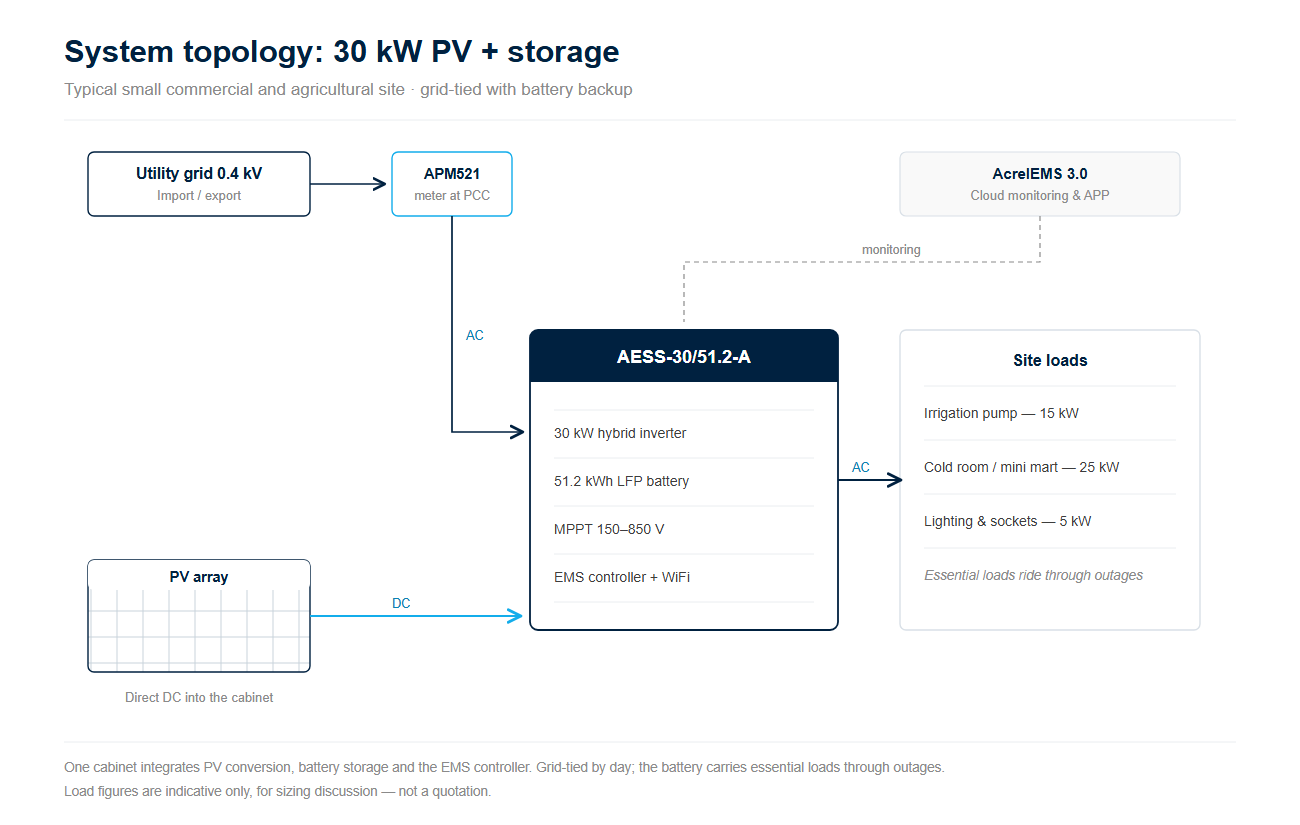
Sizing, in the order the numbers have to be worked out
Doing this in the wrong order produces systems that are oversized or disappointing. The sequence matters more than any single figure.
The order matters because each number constrains the next. Get the starting current wrong and the inverter is undersized for the one moment that matters; get the ride-through time wrong and the battery is either too small to help or bigger than the site needs.
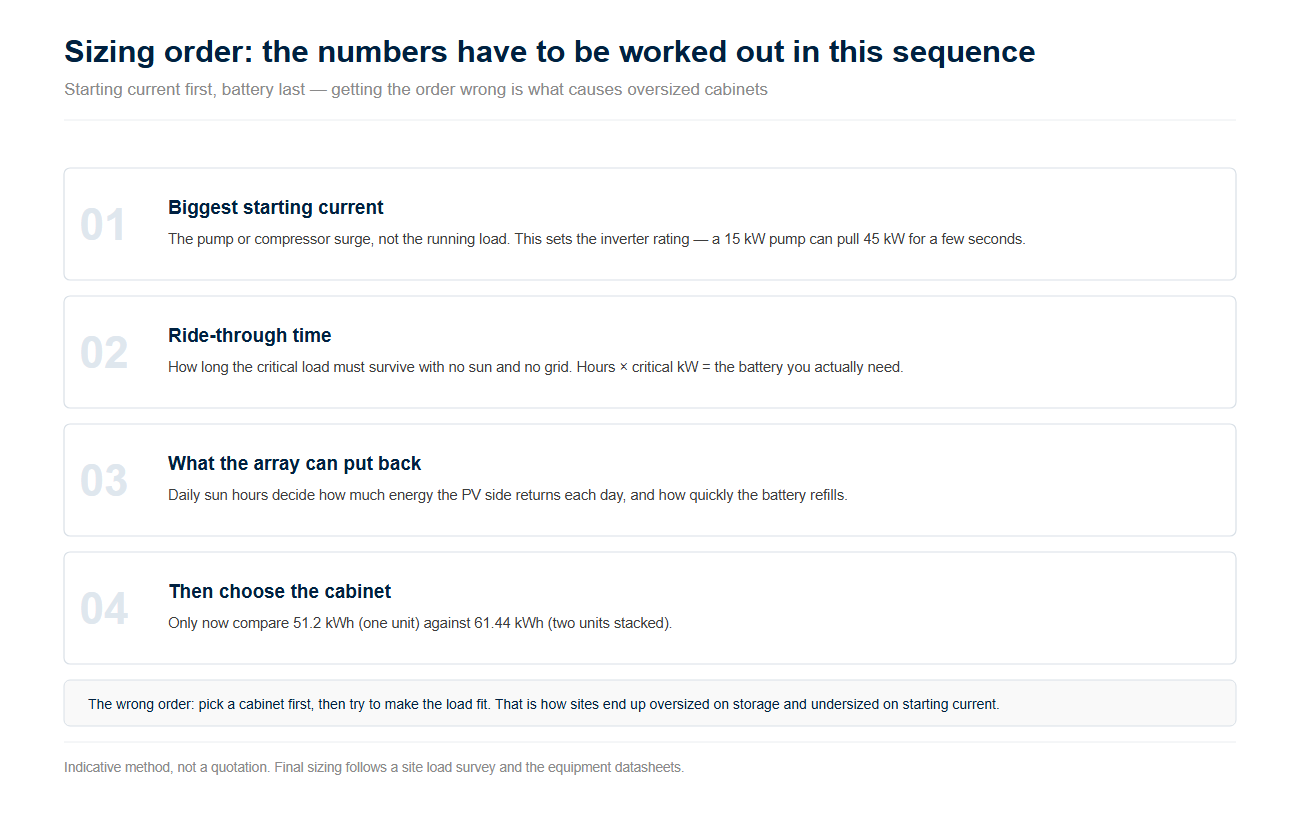
One cabinet or two: 51.2 kWh against 61.44 kWh
The same cabinet comes with two battery configurations, differing by one pack. Shared across both is a 30 kW hybrid inverter; DC input 48 kW max, MPPT 150–850 V, 1000 V max; IP54 air-cooled with aerosol fire suppression; -20 to 55 °C, 0–95% RH, up to 2000 m.
|
5 packs
51.2 kWh
256 V nominal, 216 – 288 V
Daytime load with a modest evening requirement
Enough for a site that only needs to ride through short outages
|
6 packs
61.44 kWh
307.2 V nominal, 259.2 – 345.6 V
Load that must run well into the night
The larger margin for an evening peak
|
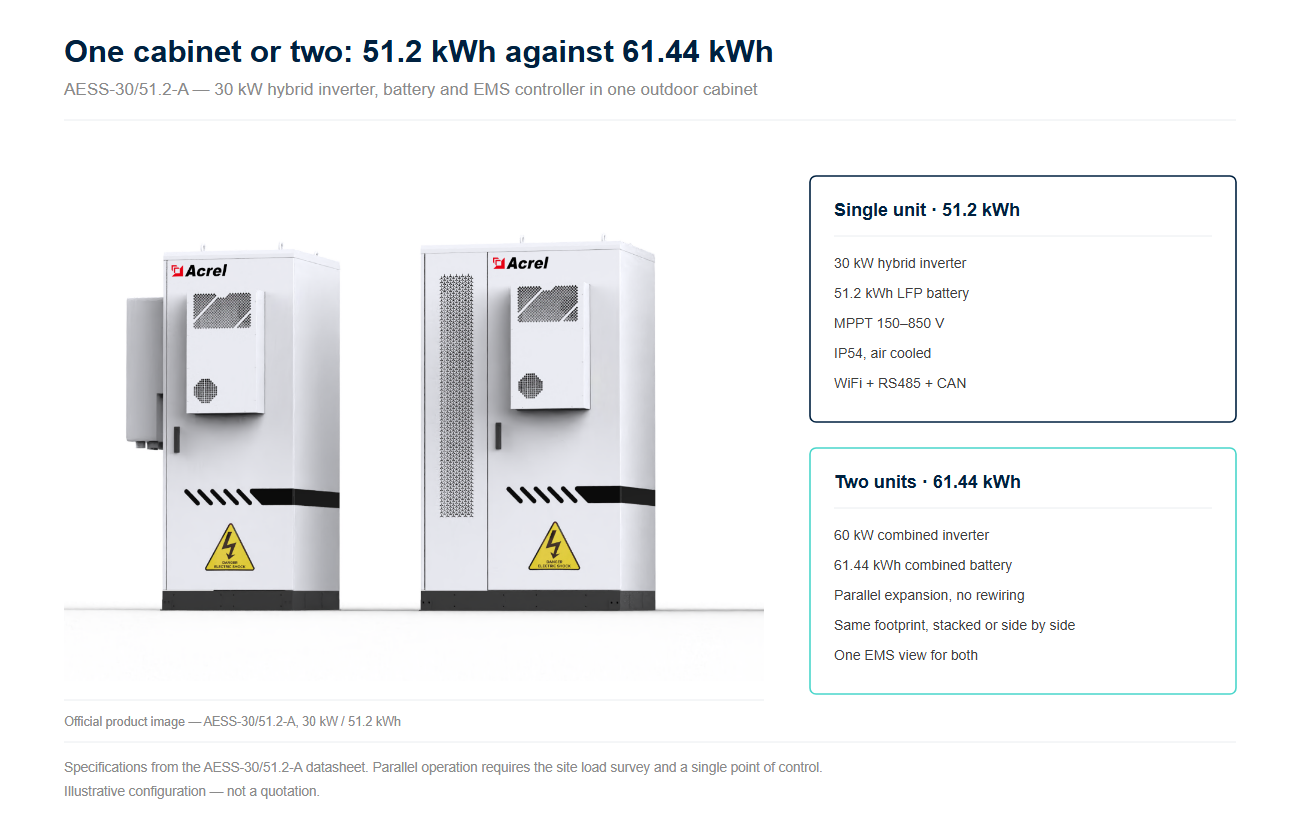
Metering and remote monitoring on a small site
A small site usually has nobody to read a display, so metering and remote access matter more, not less. The metering layer:
The cabinet reports over RS485, CAN or Wi-Fi, and the supplier's platform provides remote monitoring. With no permanent staff, the value is in the alarm: state of charge falling faster than usual turns a failure into a scheduled visit.
THE DECIDING NUMBER For a workshop with hand tools, a small compressor and lighting, 30 kW is enough. For a large motor, an induction furnace or a chiller plant it is not — the starting current alone exceeds what the inverter can deliver.
This article is technical information, not a commercial offer. Specifications are taken from Acrel published literature for the AESS-30/51.2-A. Load ranges shown are indicative guidance only; final sizing requires a load survey and on-site measurement. Certification and local approval should be confirmed with Acrel before purchase.
Post time: Oct-14-2026


