

A microgrid rarely fails because a meter is wrong. It fails because one link keeps answering a question nobody asked.
Four layers, four questions
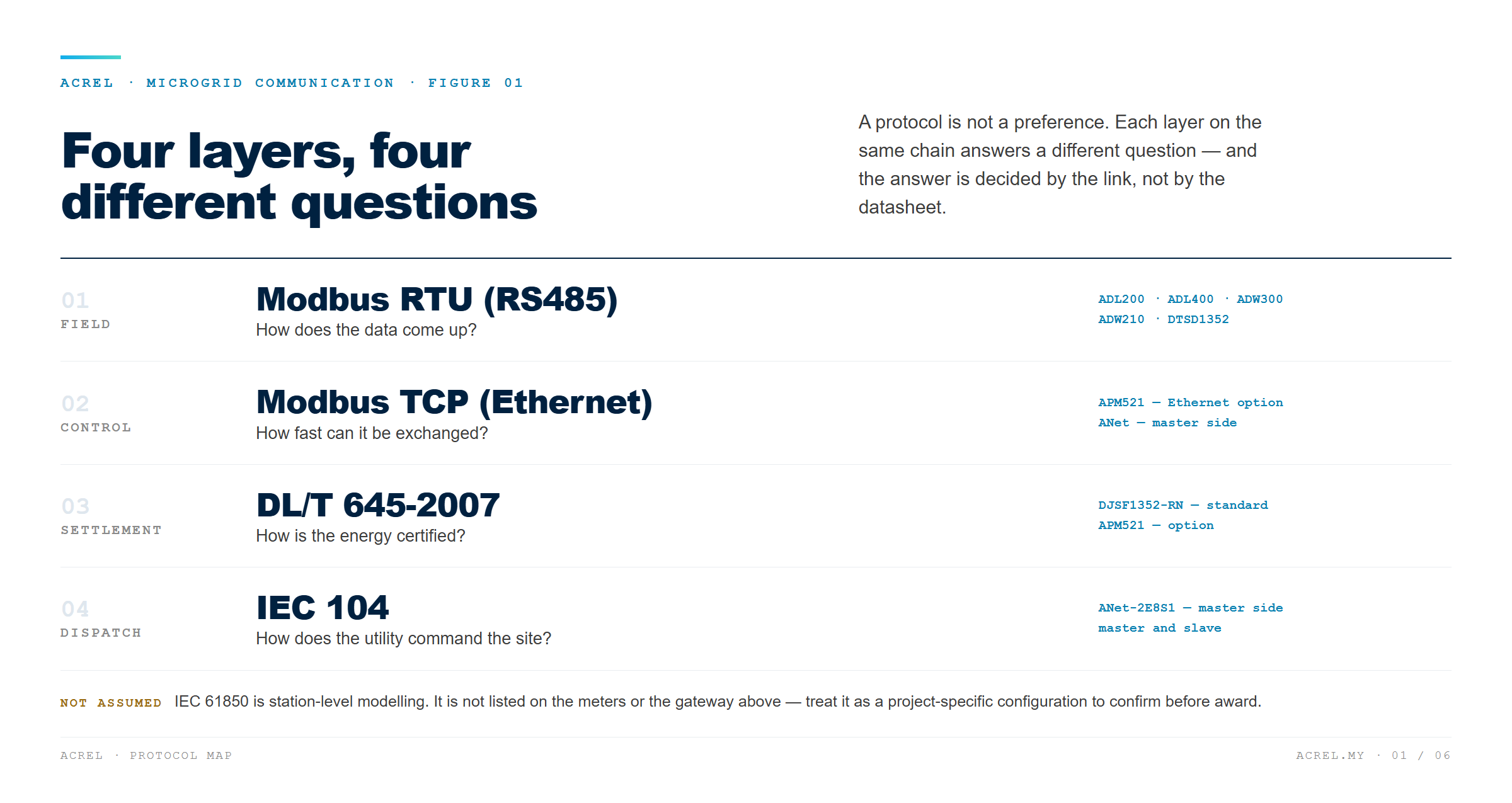
A fieldbus asks how the data comes up. Ethernet asks how fast it moves. DL/T 645 asks how the energy is proven. IEC 104 asks how the utility commands the site. They are not options on a shortlist; they are four jobs on one chain.
Pick per link: a Modbus-only site is monitored but cannot be settled.
Both ends must agree
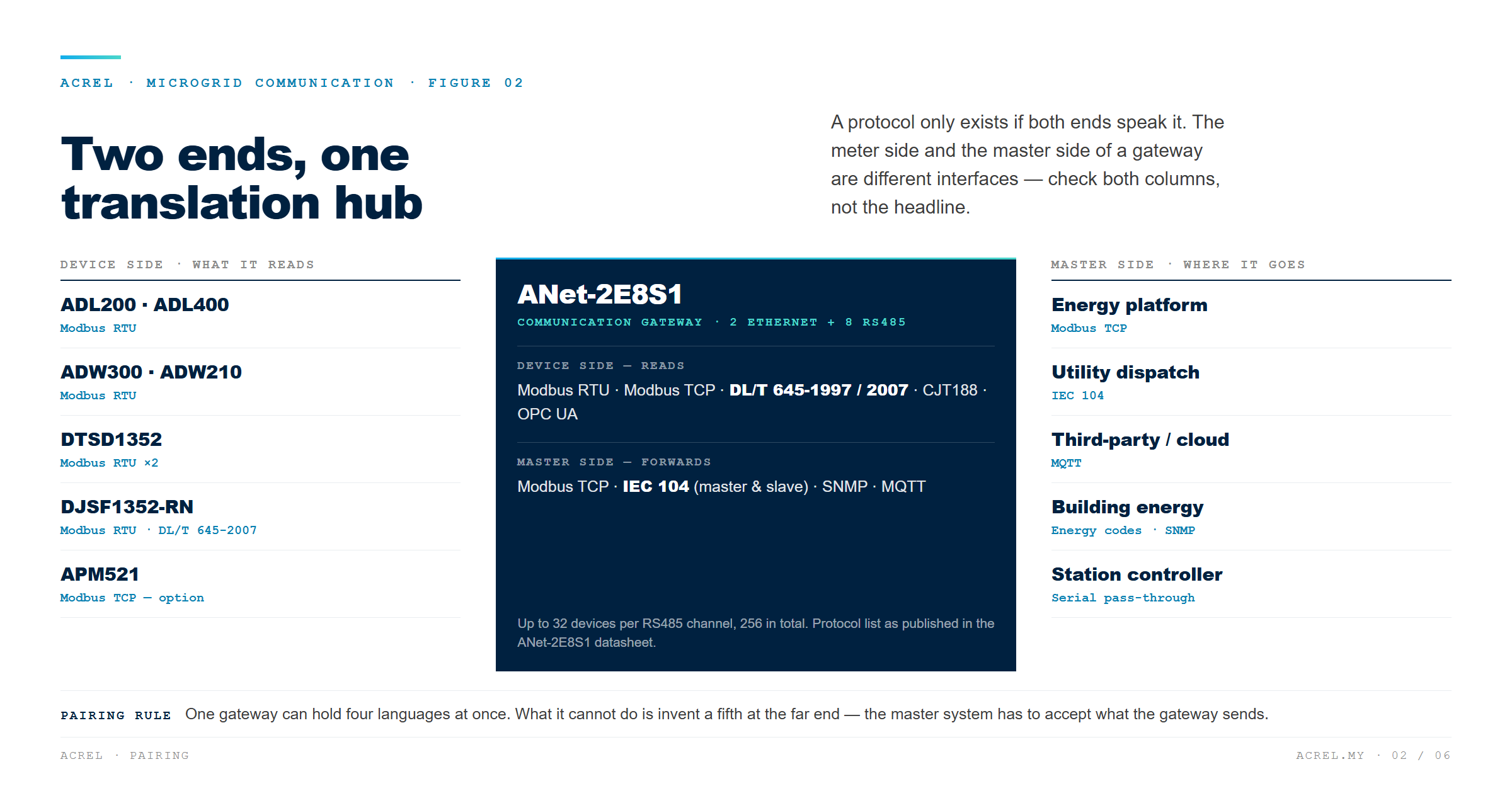
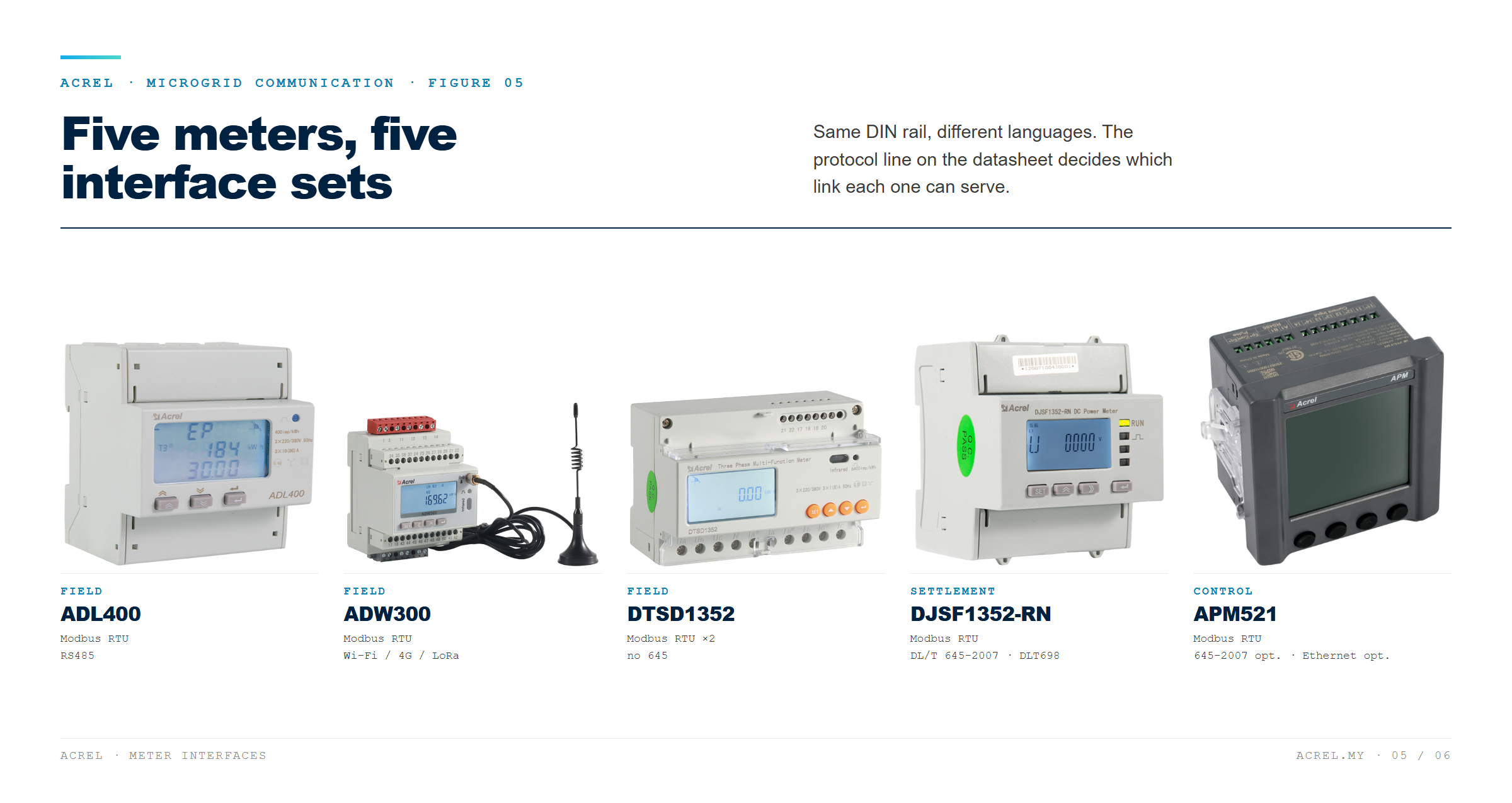
Modbus RTU is the field default: every DIN-rail meter here reports over RS485 Modbus-RTU. Modbus TCP belongs in the cabinet, where the exchange keeps pace with control — the APM521 takes Ethernet as an option, and the ANet gateway polls Modbus TCP on its master side.
DL/T 645-2007 is the settlement language, and it is not universal. DTSD1352 is Modbus on both channels; the DJSF1352-RN carries DL/T 645-2007 as standard; the APM521 lists it as an option. If the tender requires 645 at the gateway, order 645 — it is not a default.
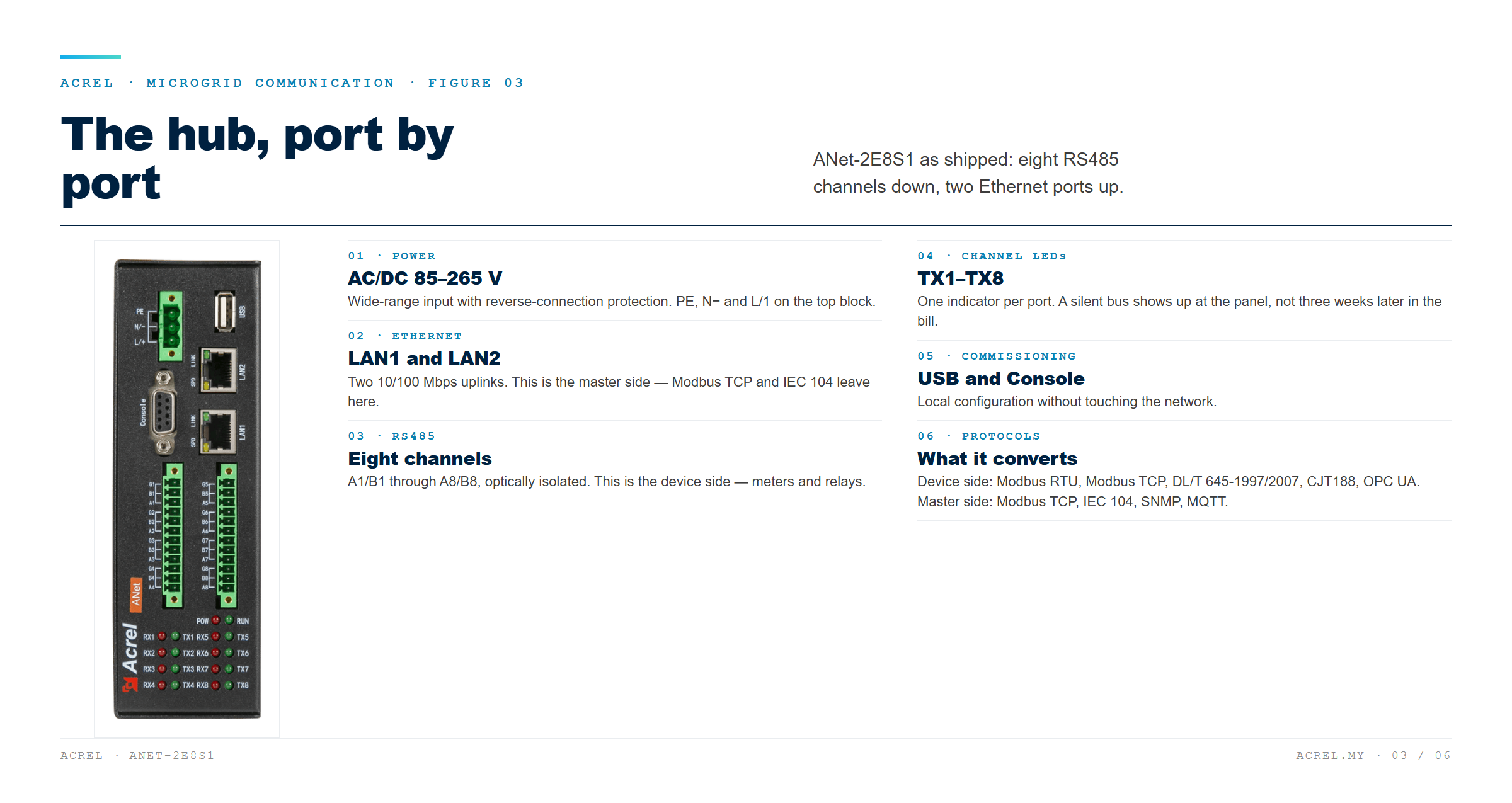
IEC 104 is the dispatch language, and it lives in the gateway. Its datasheet lists 104 in master and slave mode there, That link turns a site into a controllable resource.
IEC 61850 sits above them at station level. None of the meters or the gateway lists it, so treat it as a per-project item, confirmed at award.
From combiner box to dispatch
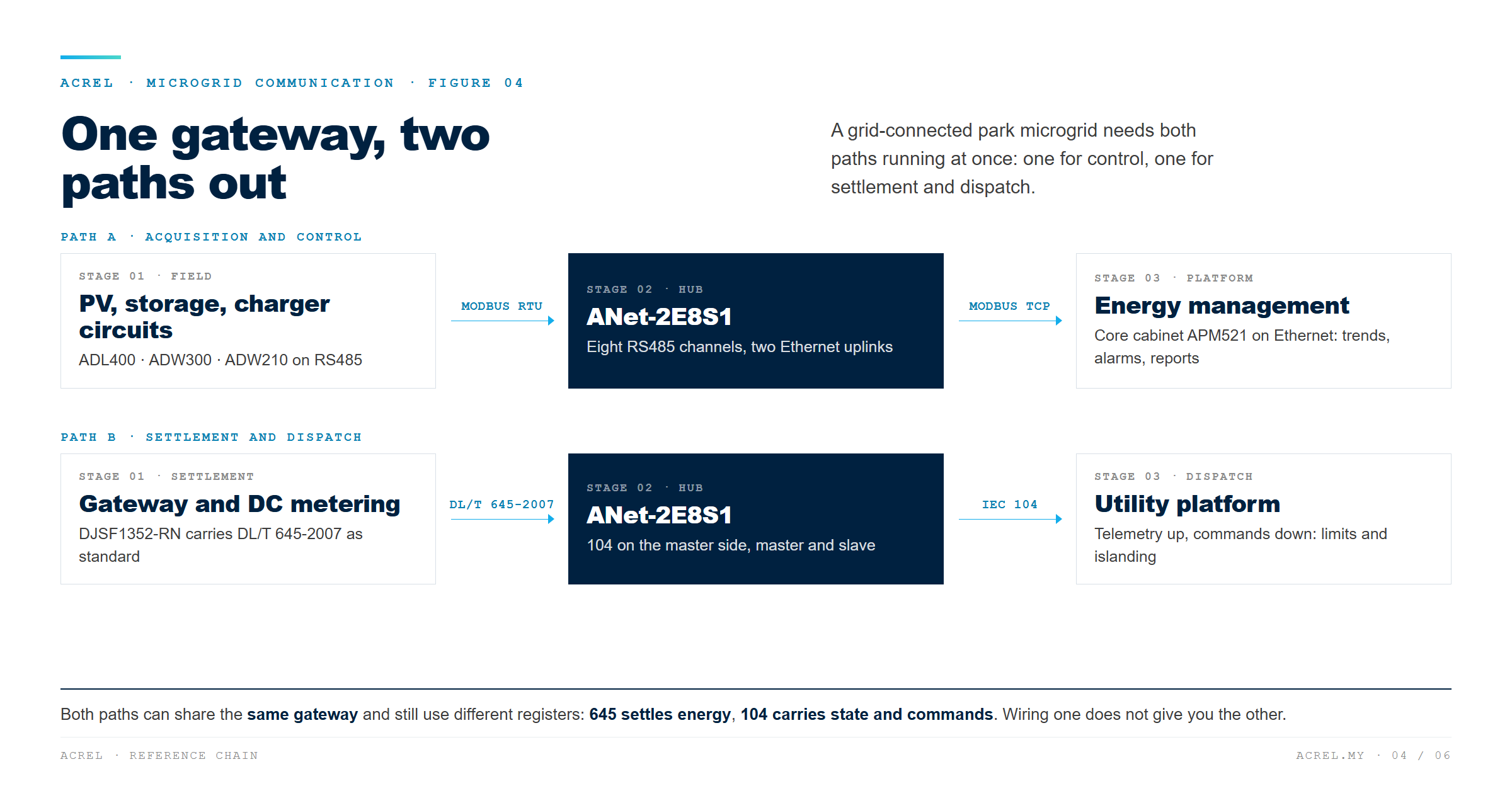
A park microgrid runs two paths at once. Acquisition: combiner-box, storage-branch and charger meters over RS485 Modbus RTU into the ANet gateway, out over Modbus TCP to the energy platform, with the core-cabinet APM521 beside it. Settlement and dispatch: the settlement meter’s DL/T 645-2007 energy, and the gateway’s IEC 104 uplink.
Same gateway, different registers. Wiring one path does not give you the other.
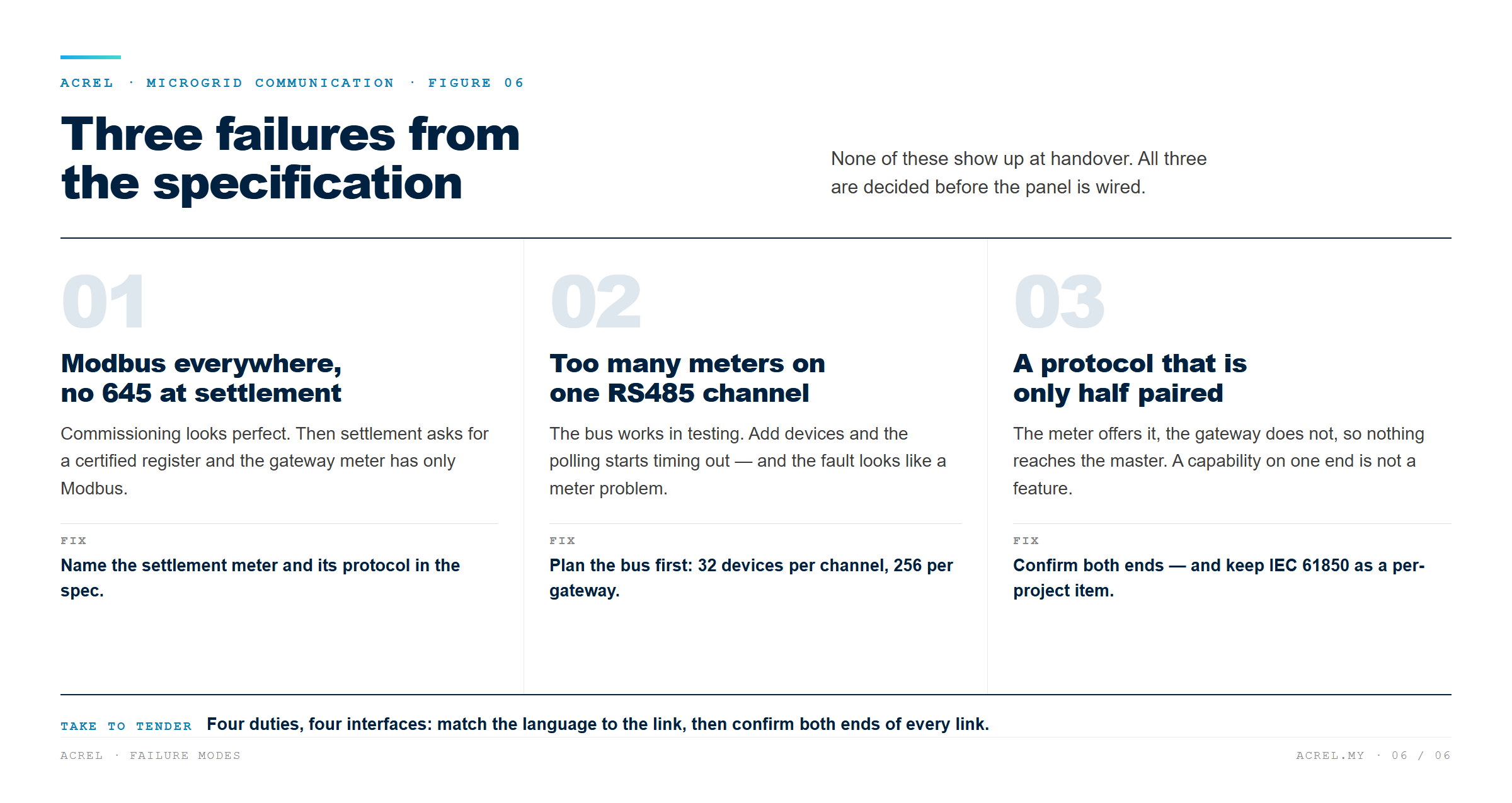
Three failures that start in the spec
Post time: Oct-26-2026


