

Malaysia gives large energy consumers a five-year audit cycle. The obligations around that audit — a registered energy manager, an energy management system, an annual report — run every month in between. That gap is where verified savings disappear.
Two clocks, one facility
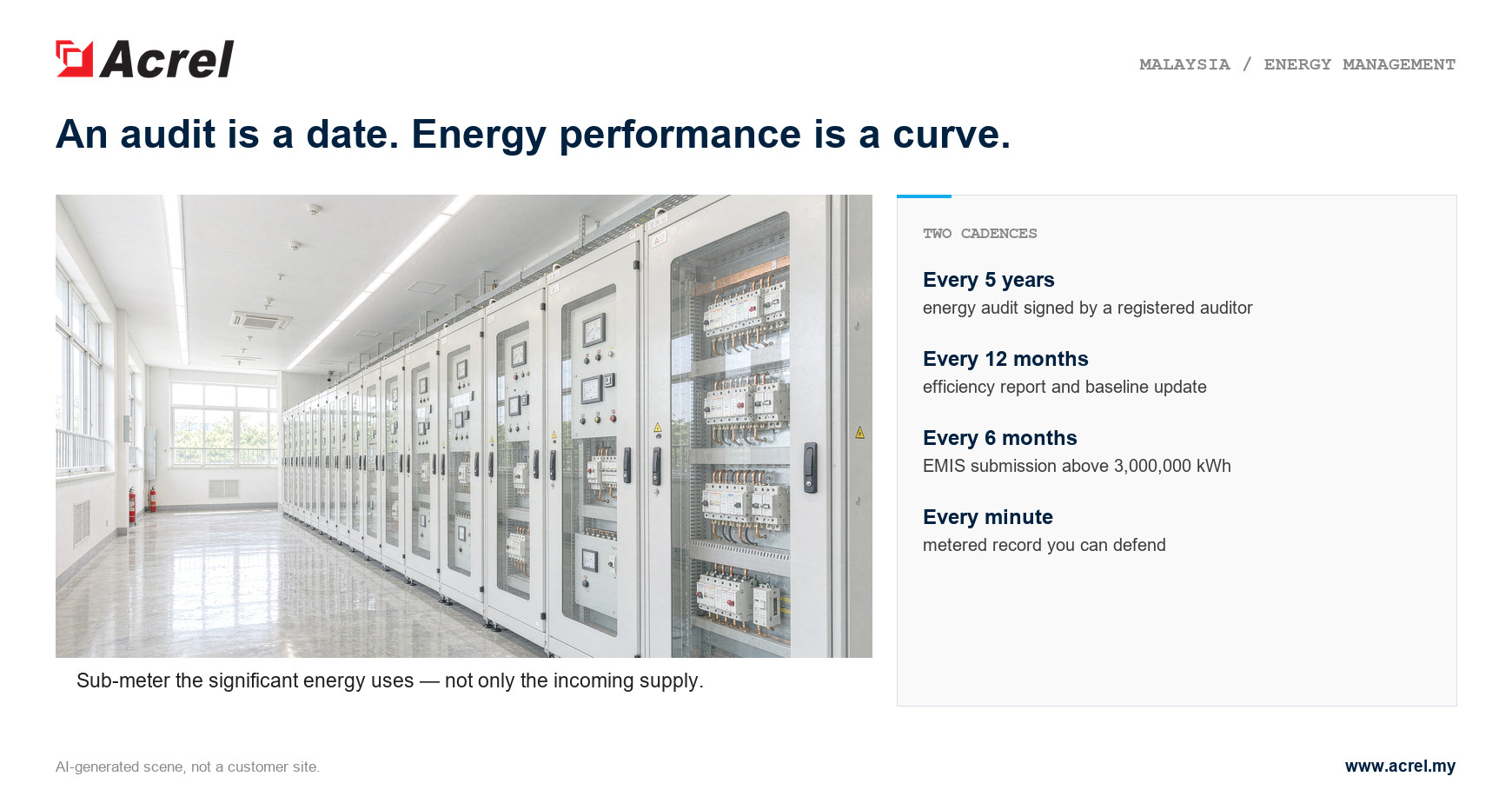
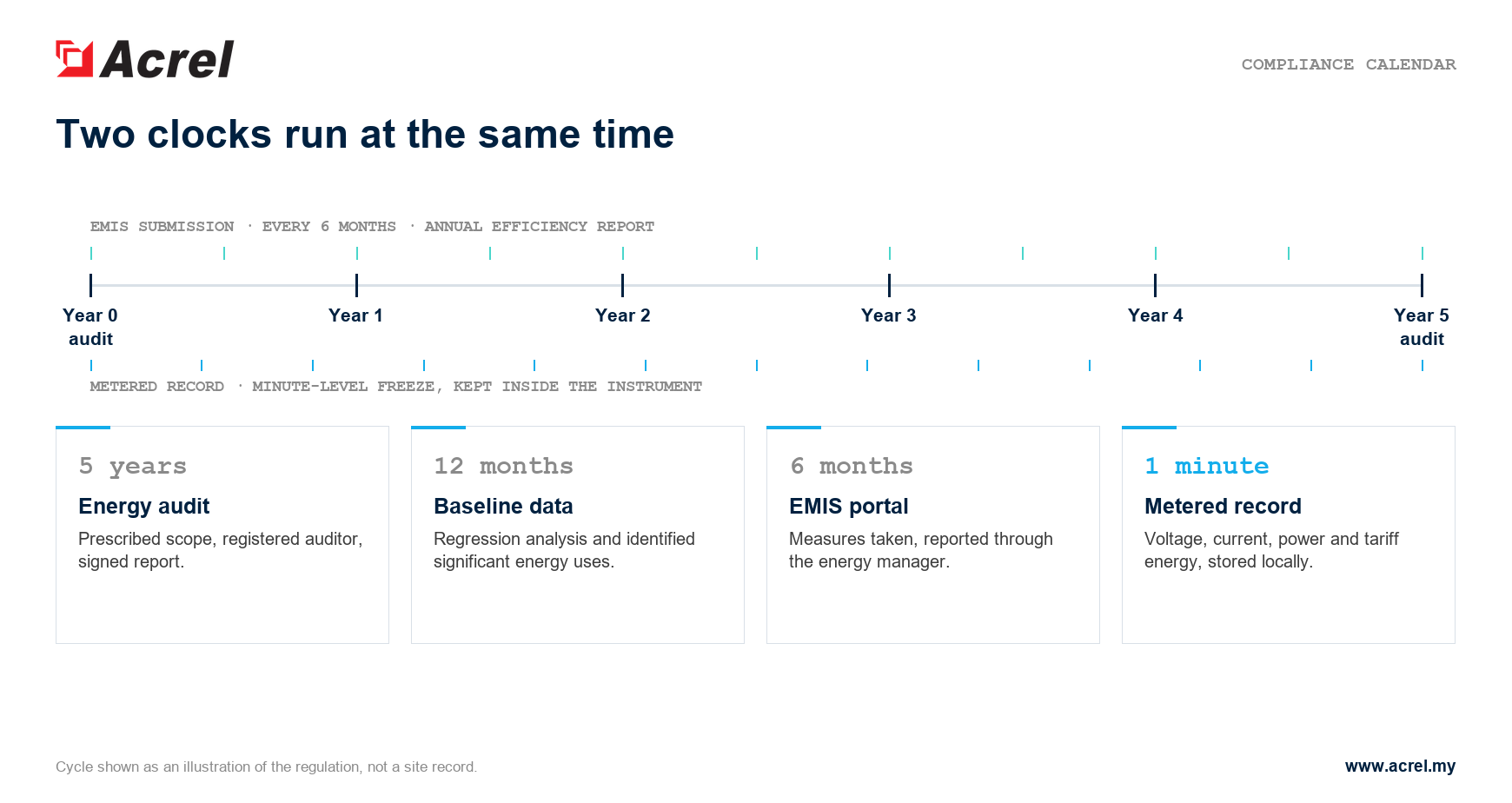
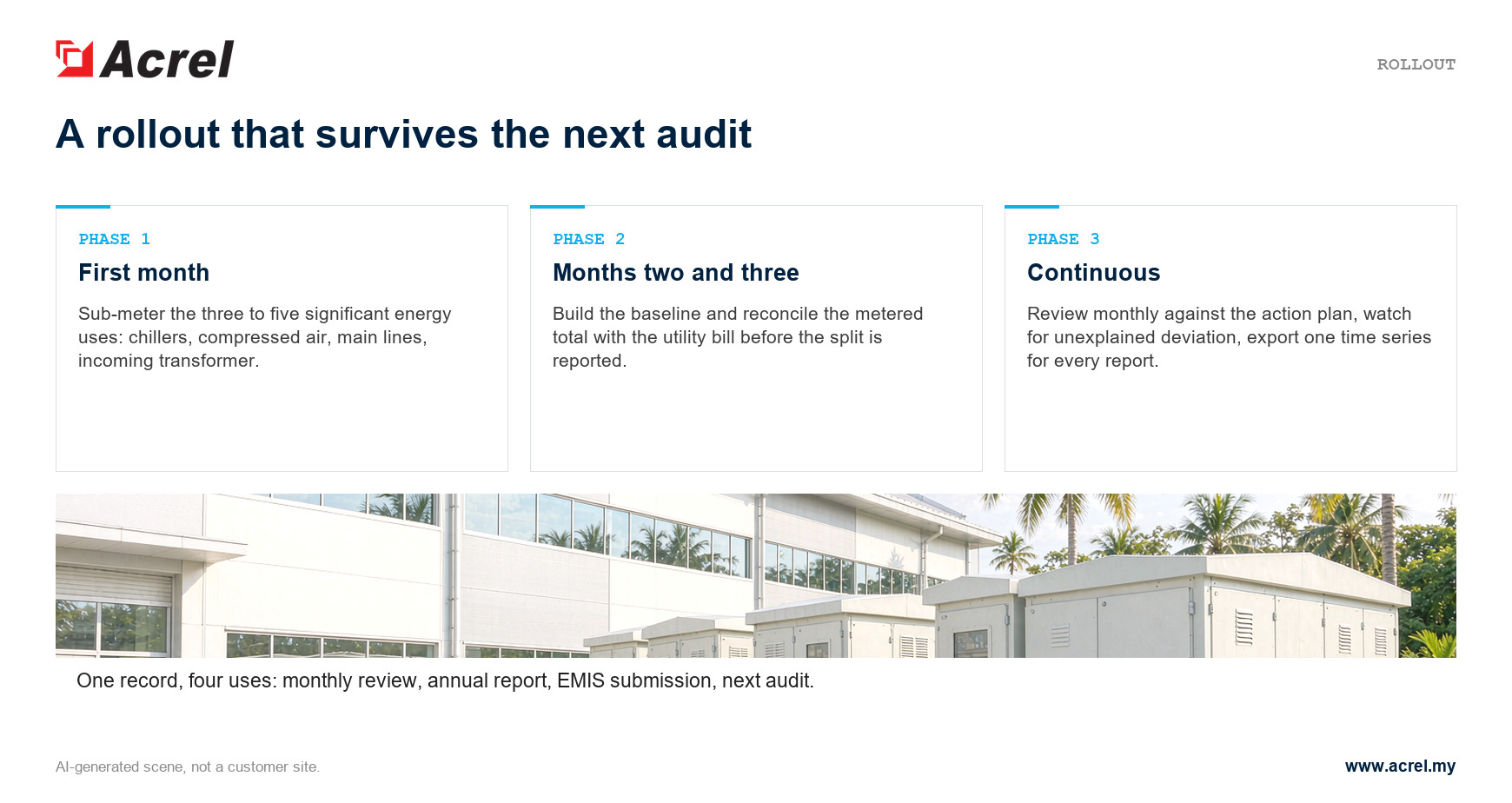
A five-year audit is the slowest item on the energy calendar. Under the Energy Efficiency and Conservation Act 2024, a facility consuming 21,600 GJ or more a year — around 6,000,000 kWh of electricity — appoints a registered energy manager, runs an energy management system, files an annual report, and completes a full audit within 12 months of the Energy Commission’s notice.
The older Efficient Management of Electrical Energy Regulations 2008 still applies above 3,000,000 kWh over any six consecutive months: the registered energy manager reports to the Commission’s EMIS portal twice a year.
So the calendar has two speeds, and the audit is the slow one.
The report is a snapshot, not a system
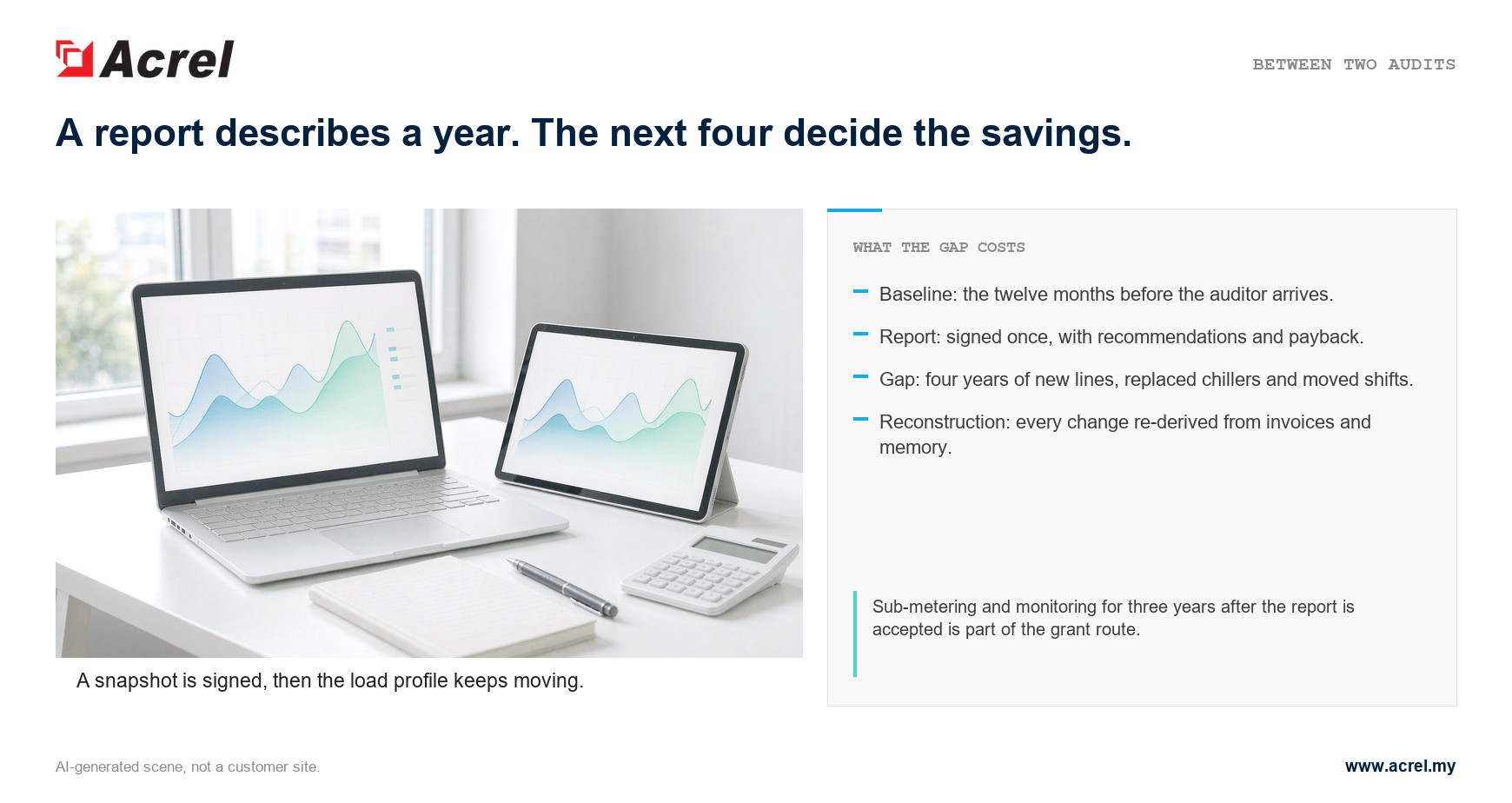
Prescribed audit scope expects roughly twelve months of baseline data, regression analysis and an identified list of significant energy uses. A signed report describes the facility as it was. The profile changes the month a line is added or a shift pattern moves, and a monthly utility bill cannot explain it.
SEDA’s grant route points the same way from the funding side: it supports the audit, then asks for sub-metering and monitoring for three years after the report is accepted.
The audit report is a dated document. The savings it recommends are a continuous claim — and a continuous claim needs a continuous record.
What “continuous” has to mean at the meter
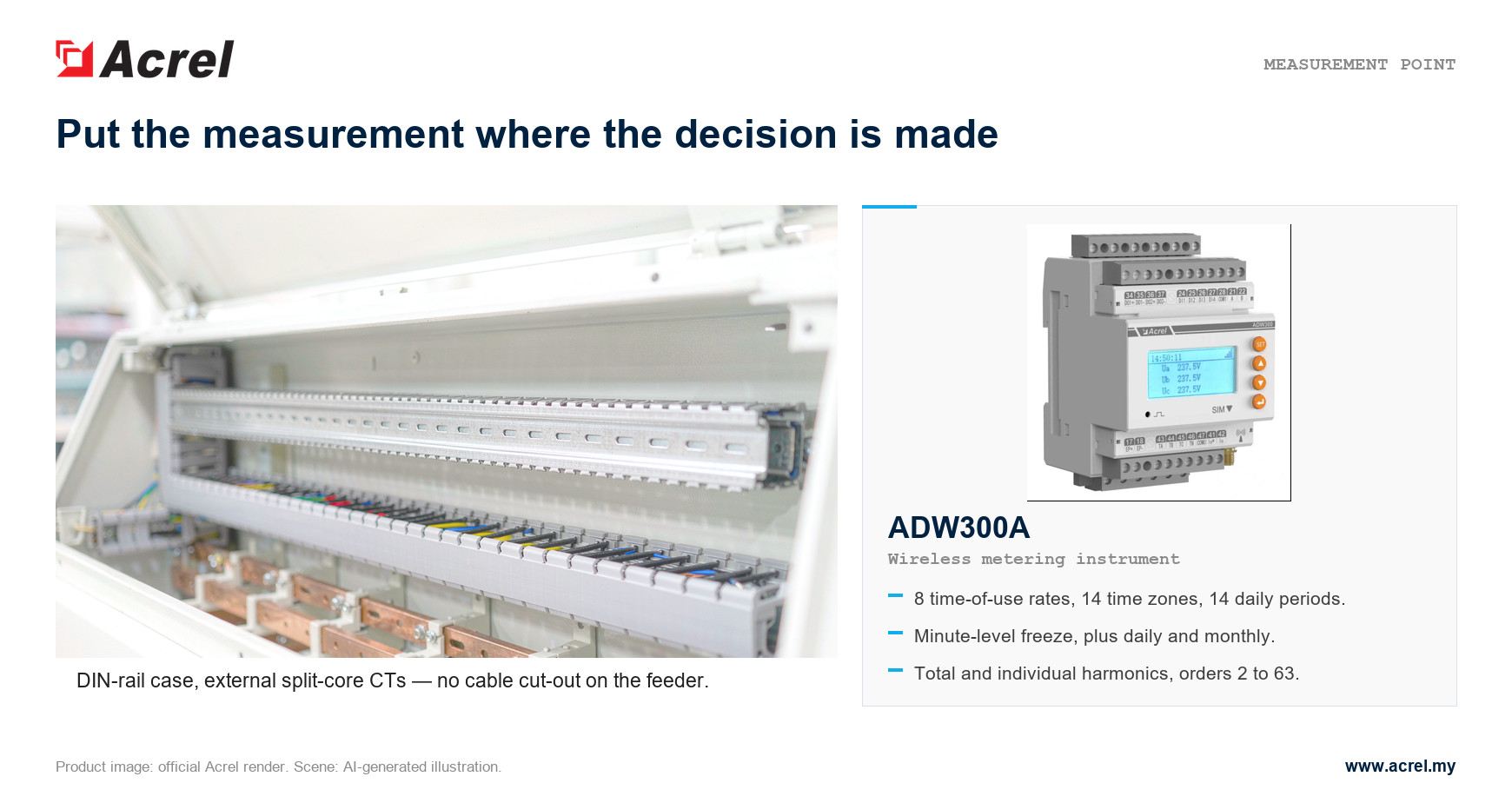
A single incoming meter read once a month answers how much. It cannot answer which load, at what hour, or against which tariff period. The ADW300A wireless metering instrument is built for that position: three-phase measurement in a DIN-rail case, external split-core CTs, and the records an energy manager has to defend later.
From meter to report without a re-wiring project
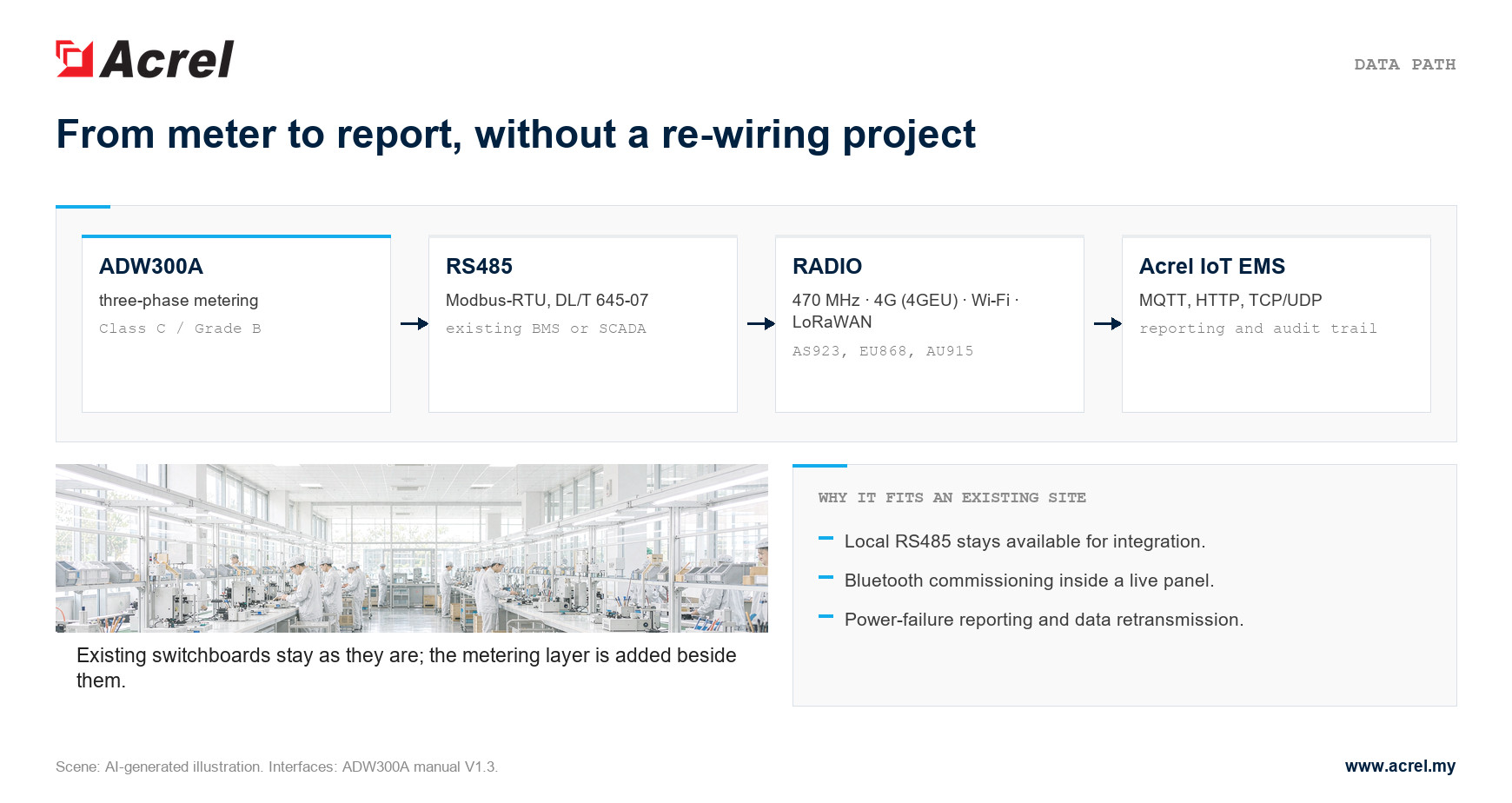
Wireless metering only helps if it fits the site that already exists. ADW300A keeps RS485 for Modbus-RTU and DL/T 645-07 beside the radio, and the radio variant is chosen for the market: 4G for Southeast Asia (4GEU), Wi-Fi, or LoRaWAN on AS923, EU868 or AU915. Data can be pushed to a third-party platform over MQTT, HTTP or TCP/UDP, so the metering layer sits next to an existing BMS instead of replacing it.
Matching the meter to the load
Selection is mostly about the current path. The CT aperture fixes the range: D10 covers 100 A of basic current with a 6 A maximum, D16 reaches 400 A, and D24 reaches 600 A. Split-core CTs are the reason the instrument can be fitted to an existing feeder without cutting the cable out of service.
A rollout that survives the next audit
The three objections
Post time: Sep-28-2026


