

Off-Grid in Sabah and Sarawak — What PV + Storage Replaces in a Diesel Microgrid
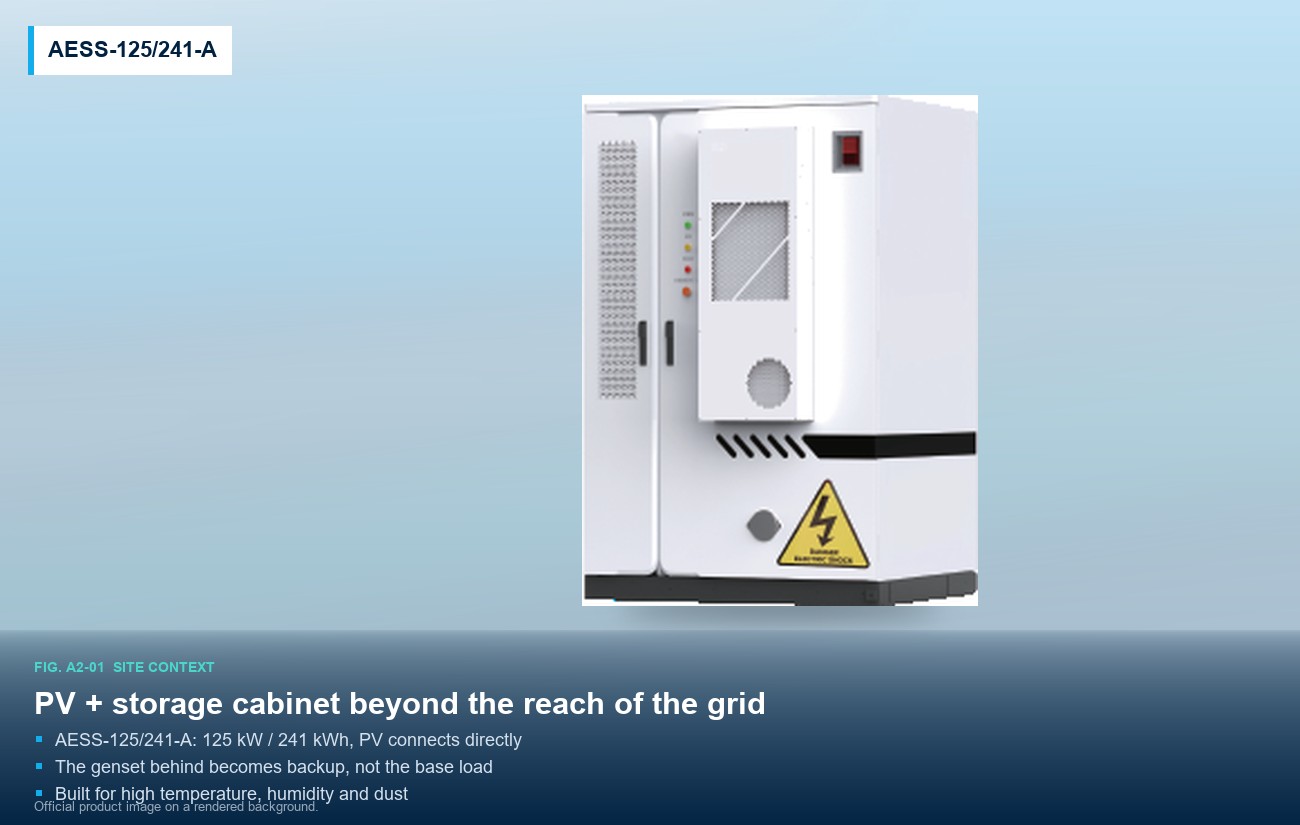
Across large parts of Sabah and Sarawak the grid either does not reach or reaches weakly, and the default answer has been a diesel generator. Diesel works, but expensively and only as long as the fuel truck arrives. What does a PV plus storage microgrid replace on a remote site?
What off-grid actually looks like — and what diesel costs
East Malaysian off-grid sites are not all the same. Four recognisable situations:
plantations and estates (worker housing, pumps, workshops); telecom base stations and oil field sites; villages and island communities (household load with a pronounced evening peak); and weak-grid sites, where a supply exists but voltage and frequency move around.
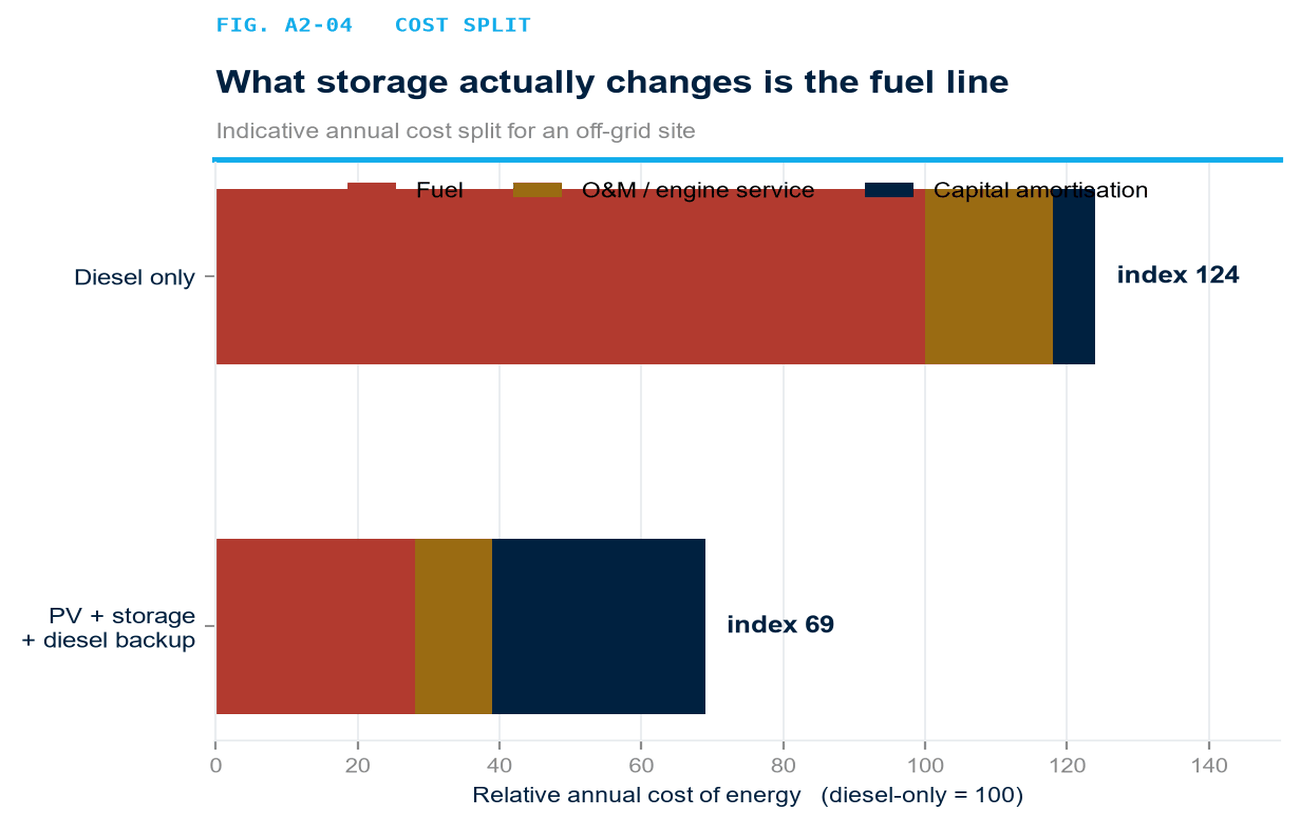
The generator purchase price is not the problem; what follows is. Fuel delivered to a remote location, servicing on a fixed interval regardless of load, the inefficiency of a lightly loaded engine, and the noise near housing. A diesel-only supply also has a single point of failure. Where the diesel money goes, illustratively: fuel 62%, servicing 16%, low-load inefficiency 13%, downtime 9%.
What PV plus storage changes
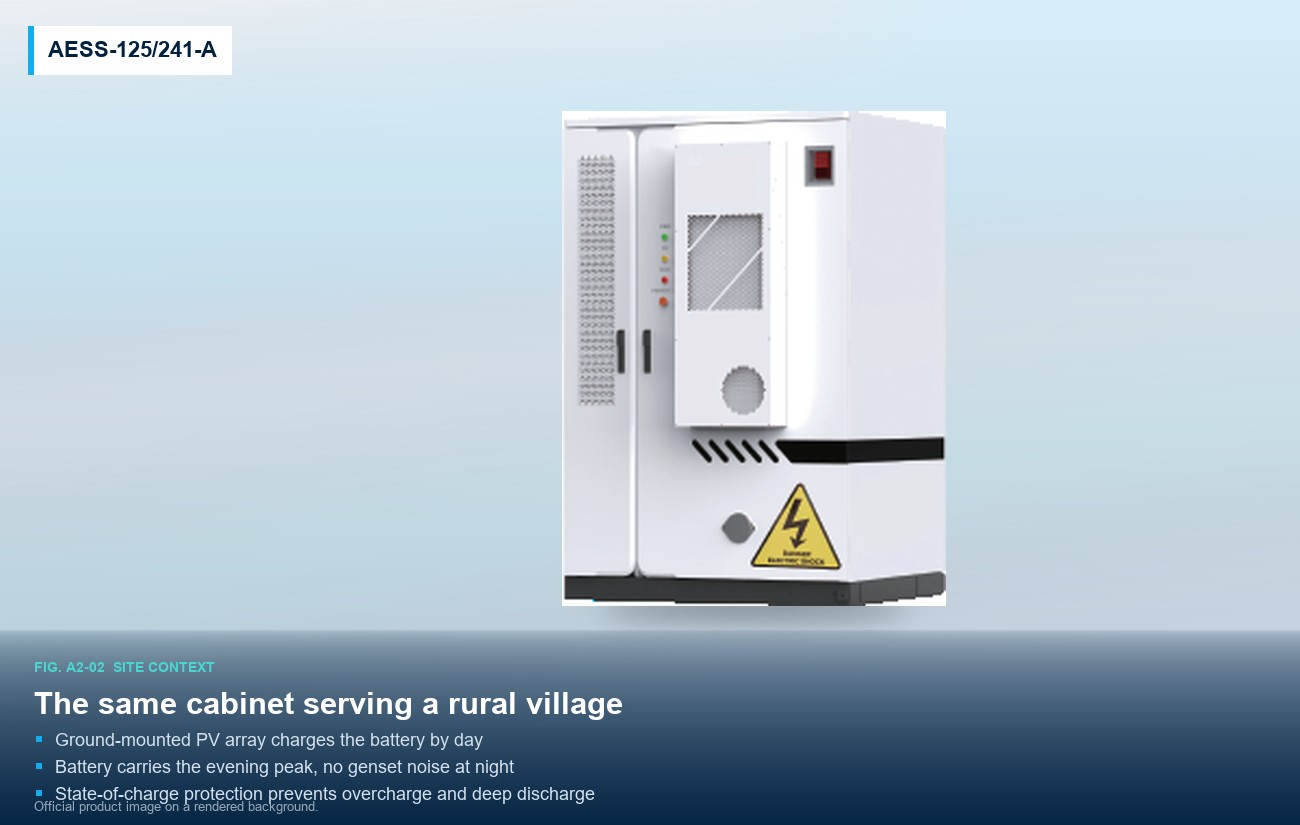
Adding PV and a battery between the load and the generator moves the generator from primary source to backup. It still carries the load when it has to, but it stops running all day and the fuel line stops being the dominant one. Daytime load is carried by the array, the evening peak by the battery, and the generator runs in blocks to recharge rather than continuously to follow.
Diesel-only burns fuel for every kWh generated; PV + storage burns only when the generator runs. Engine hours fall from continuous to reduced, and the remaining hours run near the most efficient point. Power quality also improves, because the battery and inverter hold a stable supply.
AC-coupled or DC-coupled, and the dispatch order
AC-coupled suits an existing site: a generator and an AC distribution board, with a PV inverter feeding the AC bus and storage as a separate AC unit — more conversion steps, so lower round-trip efficiency. DC-coupled suits a new build: modules connect straight to the cabinet MPPT input, fewer steps, higher efficiency, and PV fluctuation buffered by the battery.
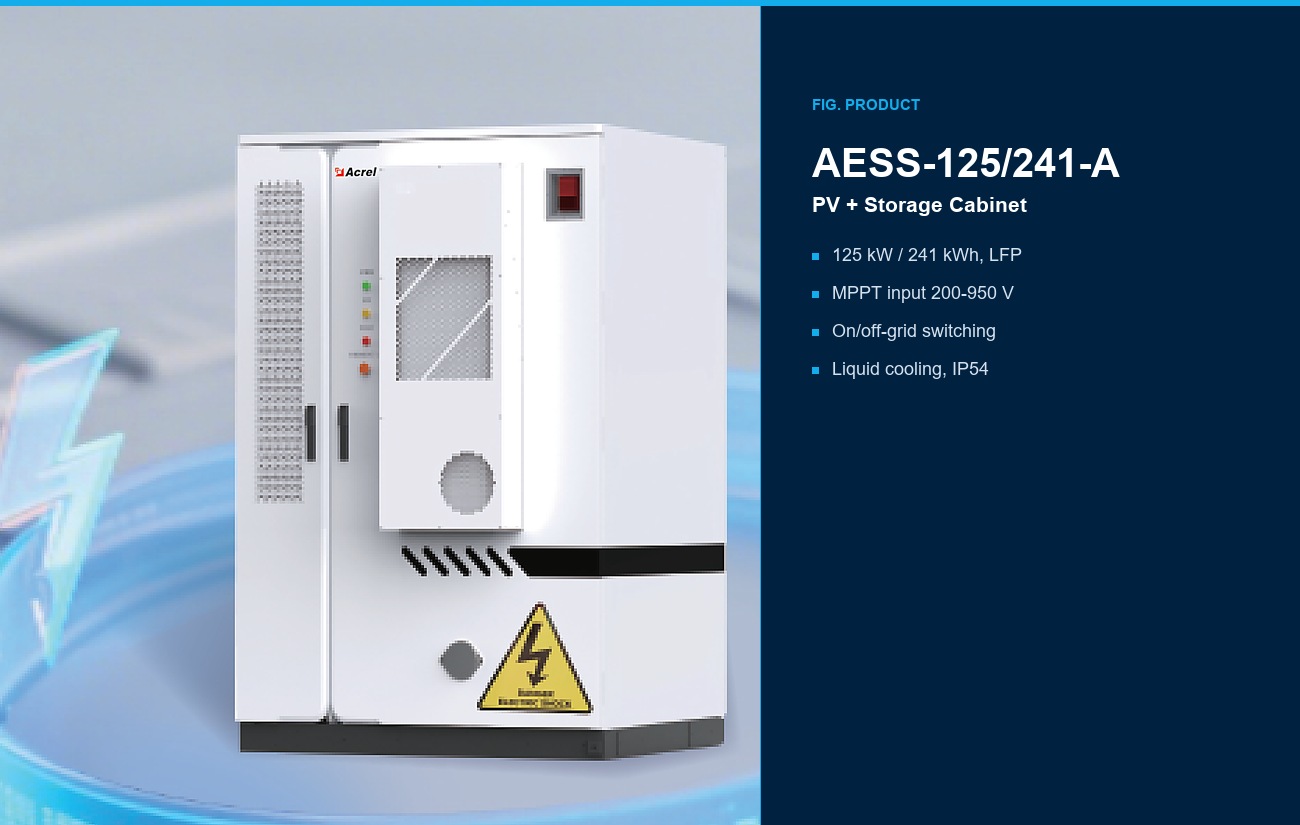
The AESS-125/241-A is rated 125 kW and 241 kWh with an LFP 3.2 V 314 Ah cell in a 1P240S arrangement. Its MPPT input accepts 200 to 950 V and up to 120 kW of DC input power, which is what allows PV modules to be connected directly. Certification is EN 62477-1, EN 61000-6-2 / -4 and UN38.3. The site normally also carries an energy meter at the distribution board and a cloud platform for remote monitoring.
Dispatch logic, not hardware, decides the economics: 01 PV covers the load first, surplus charges the battery; 02 the battery fills the gap after dark, carrying the evening peak; 03 the generator starts only at low state of charge; 04 once SOC recovers, the changeover returns the site to the inverter side and the generator shuts down.
What else has to be right
Heat, dust and salt. The AESS-125/241-A is IP54, -25 to 50 °C, liquid cooled, which keeps the cell-to-cell temperature difference small. Shade and airflow around the cabinet are part of the design.
The changeover. Whether the transfer between inverter and generator supply is seamless or involves a brief interruption depends on whether a static transfer switch is included.
Generator sizing. The required rating is often lower than a diesel-only design, becausethe battery absorbs the starting surges that would otherwise size it.
Frequently asked questions
Sometimes, but it depends on the load and how much the site values continuity. A system sized for a normal day will not always cover several consecutive overcast days plus a peak, so keeping the generator as backup lets the PV and storage be sized for the common case.
Yes. The same cabinet supports on-grid and off-grid operation, importing from a weak supply when available and carrying the load when it is not.
-25 to 50 °C ambient, 0 to 95 per cent humidity, up to 2000 m altitude. Higher-altitude sites need a separate assessment.
reading
This article is technical information, not a commercial offer. Product specifications are taken from Acrel published literature. Certification and local Malaysian approval requirements should be confirmed with Acrel and the relevant authority before the specification is frozen. Cost comparisons shown are illustrative.
Post time: Oct-13-2026


