

The factory installed solar PV to cut energy costs, but its power factor fell below 0.5 after grid connection. Power-factor adjustment charges appeared every month, and 13 of 40 capacitor units bulged and failed. After Acrel ANSVG static var generators were installed, the electricity bill changed from a penalty to a credit in just over one month.
1. The Hidden Burden Created by Solar PV
Because the factory load was relatively light, not all PV generation could be consumed on site. Active power imported from the grid fell sharply, while reactive power remained high. During periods of strong sunlight, the power factor of the two 1,600 kVA transformers dropped to about 0.5 and 0.3. On-site measurements were as low as 0.37 and 0.49.
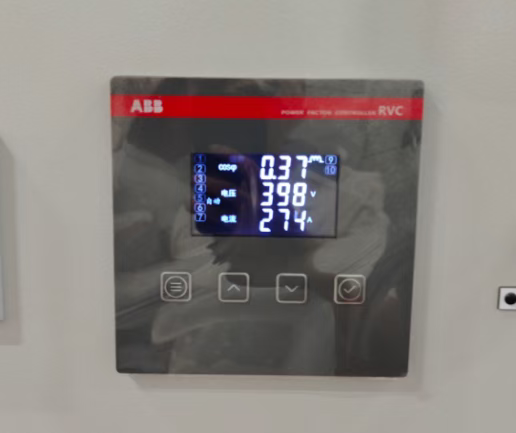
Before treatment: power factor 0.37
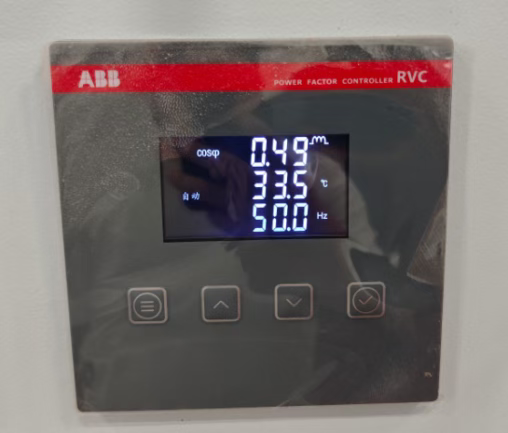
Before treatment: power factor 0.49
What does a power factor of 0.3 or 0.5 mean? Under the applicable Power Factor Adjustment Electricity Charge Measures, a monthly average power factor below 0.90 results in an additional adjustment charge. In this case, every 0.01 decrease added 2% to the charge. The impact was not limited to a higher monthly bill; the distribution system was also operating under persistent stress.
2. A Different Approach: ANSVG Static Var Generator
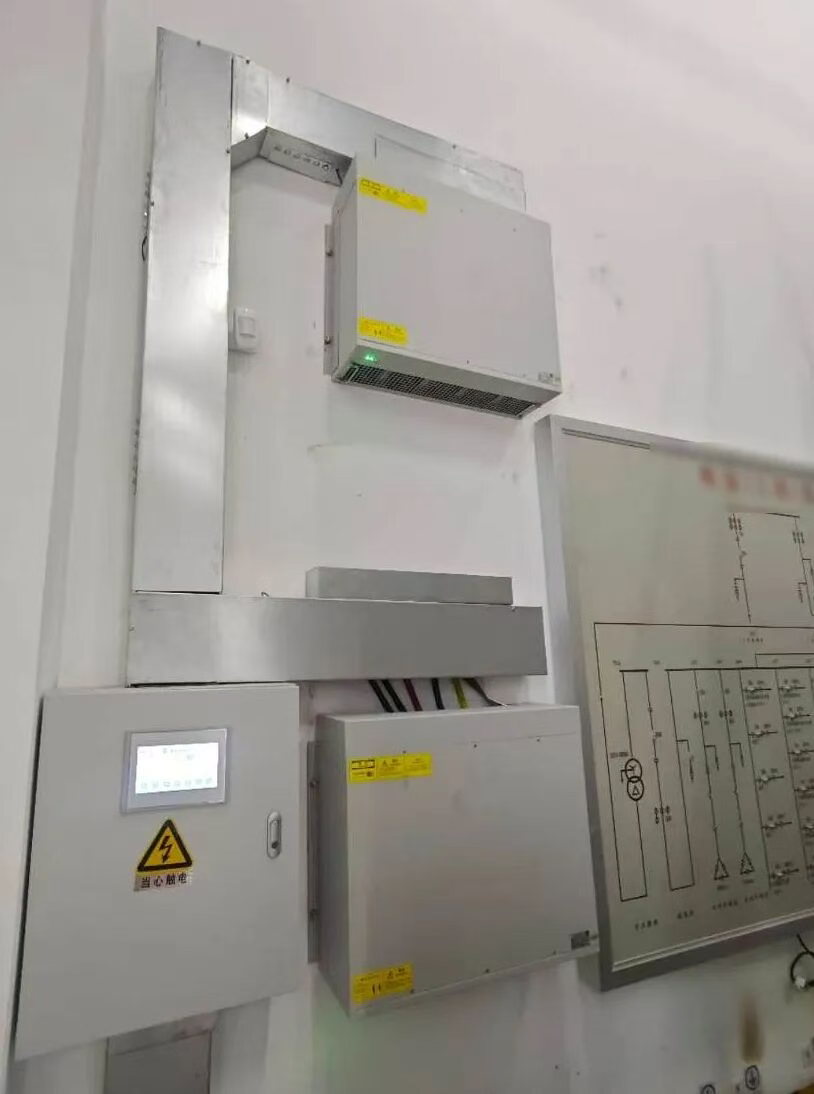
When a conventional capacitor bank could no longer manage the post-PV condition, Acrel replaced it with an ANSVG static var generator. ANSVG injects a controlled reactive current into the grid in real time, providing stepless, bidirectional compensation with millisecond-level response.
| Compensation Point | System Configuration | Functional Role |
|---|---|---|
| Point 1 - Transformer No. 1 | Two 150 kVar ANSVG units in parallel | Real-time linear reactive-power compensation; power factor maintained above 0.95; utility penalties avoided. |
| Point 2 - Transformer No. 2 | Two 150 kVar ANSVG units in parallel | Real-time linear reactive-power compensation; power factor maintained above 0.95; utility penalties avoided. |
Configuration of the four-unit, two-transformer compensation scheme
4. Measured Results: Power Factor from 0.47 to 1.00
After commissioning, real-time measurements collected from the ANSVG touchscreen provided clear evidence of the improvement.
| Measurement | Before Treatment | After Treatment |
|---|---|---|
| Device 1 | 0.47 - load side | 1.00 - grid side, 2026-08-03 11:54 |
| Device 2 | 0.60 - load side | 1.00 - grid side, 2026-08-03 13:31 |
On-site ANSVG power-factor measurements before and after treatment
The electricity bills provide even more direct evidence. Official State Grid Shanghai bills for July 2026 show that both receiving points exceeded the 0.90 assessment standard and received a negative adjustment charge, which appears as a credit.
| Receiving Point | Actual Power Factor | Assessment Standard | Adjustment Coefficient | PF Adjustment Charge |
|---|---|---|---|---|
| No. 1 | 0.97 | 0.90 | -0.75% | CNY -674.87 (credit) |
| No. 2 | 0.99 | 0.90 | -0.75% | CNY -1,063.53 (credit) |
Source: State Grid Shanghai electricity bills, July 2026
5. Business Impact: From Monthly Penalties to Monthly Credits
Project results at a glance
5. Business Impact: From Monthly Penalties to Monthly Credits
The two receiving points generated a combined monthly power-factor adjustment credit of CNY 1,738.40. Compared with the high penalties before the retrofit, the system now reduces the electricity bill and allows the PV investment to deliver its intended savings.
| Site | Condiment manufacturing facility, Shanghai, China |
| Electrical System | Two 1,600 kVA transformers |
| Installed Compensation | Four 150 kVar ANSVG units; two units in parallel per transformer |
| Lowest Pre-Retrofit PF | 0.37 and 0.49 in on-site measurements |
| Post-Retrofit PF | 1.00 at the ANSVG touchscreen; 0.97 and 0.99 in the monthly bill assessment |
| Monthly PF Adjustment | CNY 1,738.40 credit |
| Estimated Annual Savings | Approximately CNY 21,000 from the PF adjustment item alone |
Project results at a glance
Over one year, the power-factor adjustment item alone represents approximately CNY 21,000 in savings. This estimate excludes longer-term benefits from preventing capacitor bulging and failure, reducing transformer losses and lowering line losses.
The ANSVG series is supported by granted invention patents, software copyrights, utility-model patents and design patents, providing a reliable quality foundation for delivered systems.
Acrel ANSVG - Helping Enterprises Make Better Use of Every Kilowatt-Hour
Post time: Sep-02-2026


