

Malaysia's multi-site retail and food-service brands operate customer-facing locations, while energy performance is managed by central operations, facilities and finance teams. The challenge is not a lack of bills; it is the absence of consistent, timely data across the estate.
Public disclosures illustrate the scale of that management challenge.
AEON has said utility spending represents about 15% of operating cost and has described efficiency measures across 14 malls.
McDonald's Malaysia has reported combined average monthly electricity consumption of approximately 15.5 GWh across up to 285 restaurants or electricity accounts.
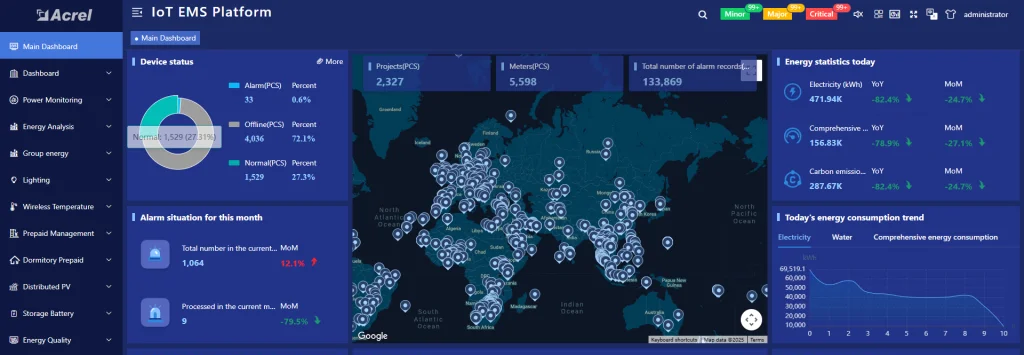
A bill records cost. It does not explain the operating cause.
For a multi-site operator, the practical requirement is a common data model: the same site hierarchy, the same major load categories, the same time intervals and the same alarm rules. Without that consistency, a head office can collect data from every location and still be unable to compare them fairly.
Operational visibility across a distributed estate
Comparable site performance
A common data structure allows operations teams to compare similar sites by total consumption, operating hours, floor area or another relevant business driver. This turns portfolio data into a practical view of which locations and circuits require attention.
Exceptions linked to action
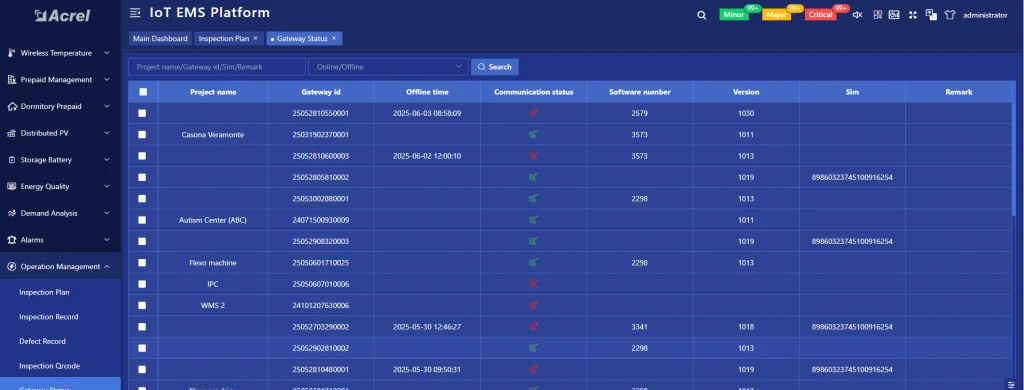
Unexpected overnight load, an offline meter, a temperature breach, an overload or an abnormal demand event becomes operationally useful when it is recorded with a responsible owner, a timestamp and a post-action check.
One data foundation for efficiency, solar and reporting
The same interval data can support schedule analysis, pre- and post-maintenance comparison, photovoltaic performance tracking and internal energy or carbon reporting. For organisations within Malaysia's EECA threshold, this data can also support the required energy management system, recurring reports and energy audits. The platform does not replace the statutory energy manager or auditor.
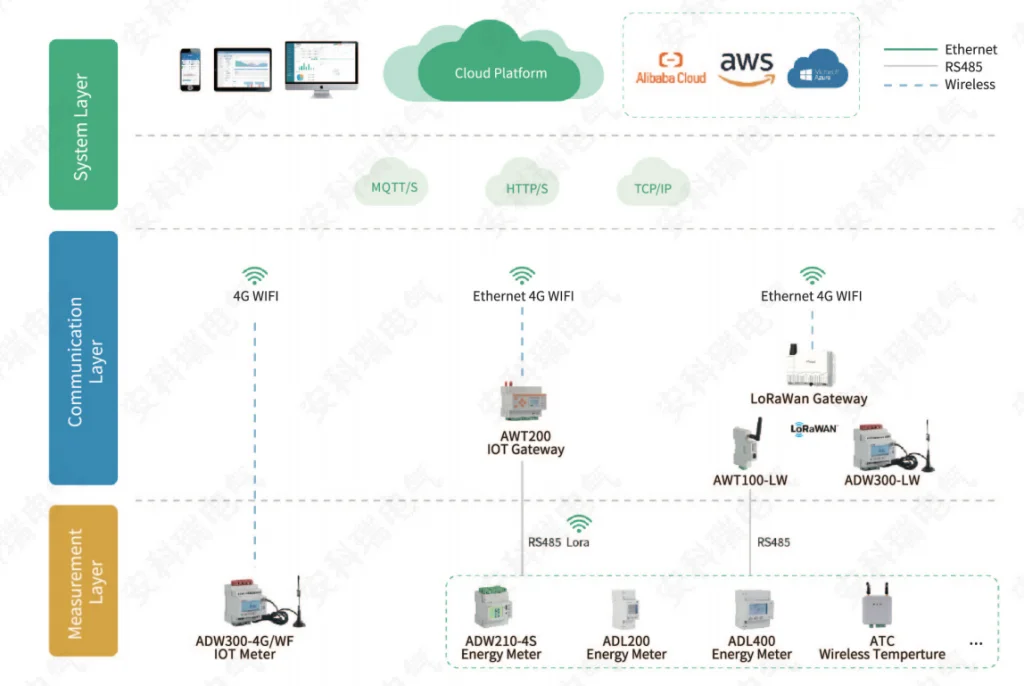
Energy data is more useful when it reflects the load structure
A Malaysian fast-food restaurant study found that air-conditioning represented 42% of audited annual electricity use, followed by kitchen equipment at 25%, other appliances at 22% and lighting at 11%. The split will not be identical at every site, but it shows why incoming-supply data alone may be insufficient. Separating HVAC, kitchen or refrigeration, lighting and other material loads gives operating teams better diagnostic context.
How Acrel EIOT supports distributed operations
Acrel EIOT connects compatible meters and gateways to a central cloud environment and organises them by project and site. Depending on the configured devices and modules, the platform supports device status, real-time electrical parameters, energy reports, demand monitoring, alarm handling, temperature monitoring, photovoltaic data and user reporting. This creates a common operating view above distributed field devices.
From visibility to measurable operational value
Across a distributed estate, the value of an IoT EMS is created when site-level deviations become visible early enough for operating teams to act and when the same data can verify the outcome. Each operator can assess avoidable out-of-hours consumption, demand exposure, recurring equipment events, reporting workload and project performance against its own baseline, without relying on a generic savings claim.
For multi-site retail and food service, the practical result is a shorter path from an energy deviation to an informed operating decision, supported by evidence that can be reviewed across locations.
Post time: Sep-02-2026


